
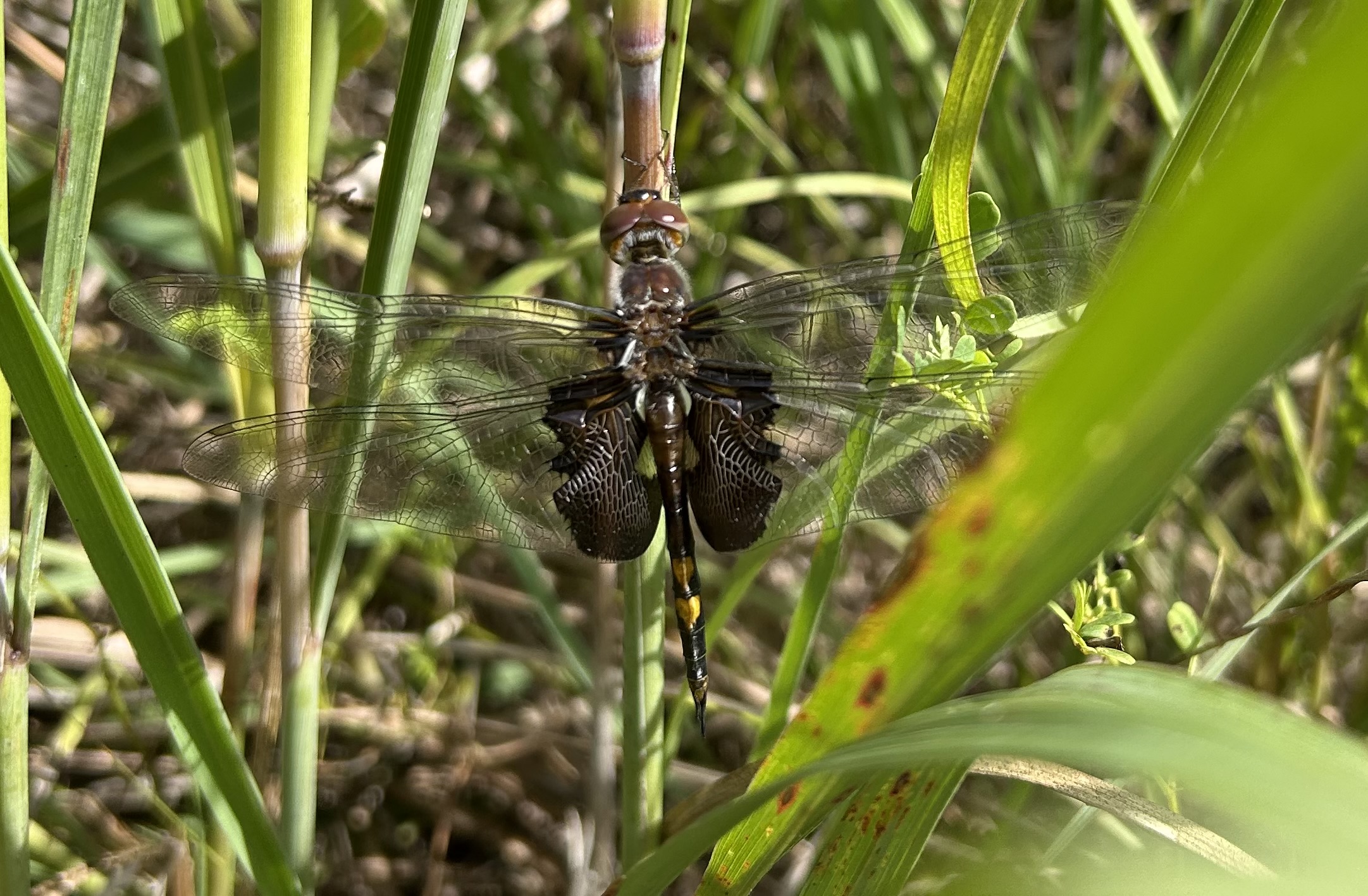
Dragonflies. I LOVE dragonflies. Even though I don’t approve of their blatant aerial intercourse practices. It’s interesting that apparently they spend only a few weeks of their lives in this beautiful aerodynamic form, while the vast majority of its life is spent in unglamorous earlier life stages.
I wasn’t aware of their super-powered eyesight. Or their ninja hunting skills.
The author also very nonchalantly describes a key difference, in my opinion, between Indigenous and Western scientists. The Dine (Navajo) people named and classified over 700 insects describing their sounds, behavior and habitats and passed on that knowledge for generations, presumably without having to kill said insects. Of course you’d be hard pressed to find a specific name within the tribe.
Contrast that with names like Henry Walter Bates, John James Audubon and Alphonse Dubois who shot and killed their subjects of study – birds for the most part – and handed them over to natural history museums.
Hawken mentions two forms of Batesian (named after the above murderer/naturalist Henry Walter Bates) mimicry: the giant owl butterfly twhose wing spots resemble the eyes of an owl, and the spicebush swallowtail, which as a caterpillar is disguised successively as bird poop and a snake.
He also asks the question that I often wonder about that scientists couldn’t care less about: “Millions of years ago, genes began to paint wings with pigmented designs of extraordinary fidelity and complexity. Who was the artist?”
He then talks about butterflies and moths. The beauty and the beast… mode of pollinators. Apparently, moths are better pollinators than bees, working the night shift. Also sadly, as human ignorance causes certain plants to disappear, it leads to moths disappearing as well. It’s a deadly downward spiral.
I loved reading about the “minds without spines” movement that question why morality and animal welfare stop at invertebrates. Honey bees, even with a 2-3 milligram brain, can count, make contrasting distinctions, and learn by observing others. Inside the hive, they communicate using short bursts of encoded information to share information about nectar location, food quality and distance above the ground.
Next comes the obligatory, human-centered perspective on why we need insects. Insects disappear, birds who feed on them disappear, plants who were being pollinated by them disappear, animals, birds and fish would cease to exist, followed by agriculture, and so on.
My thought on why we need insects? Because. Plain and simple.
While I’m not certain if this is a comprehensive list, I love it: we owe climate stability to “woodland, slough, prairie, bog, meadow, delta, grassland, cripple, taiga, coral reef, mangrove, salt marsh and tundra.” And without insects, these ecosystems “stagnate, shrivel, fade, wither, turn to mush, and perish.” and because we cannot see this dynamic, we ignore it.
Insects are disappearing due to the thousands of types of pesticides, herbicides and fungicides, some of which end up in our foods. They also disappear due to deforestation, loss of wetlands, lack of wildflowers, and other egregious and willful human activity.
Another horror story the author recounts is the genocide of sparrows in Mao’s China, considering them “pests”. With no one to eat them after the sparrows were gone, locusts and bad weather destroyed grain production in 1960, leading to millions of people dying, and stories of cannibalism, beatings, crime and murder. China ultimately imported 250,000 sparrows from the Soviet Union.
The chapter ends on a positive note, with stories of “amateurs” – apparently French for one who loves – bringing back habitats for insects in diverse ways, one of them being planting diverse, colorful, edible, blooming plants that change farmland ecosystems and make farms more resiliient, profitable and self-sustaining. Homeowners are rewilding their sterile lawns to nourish our little flying saviors.
Little things run the world by their intricate interactions with living systems.
Leave a Reply